
The First “AI” Visual Novel shows the flaws in the concept
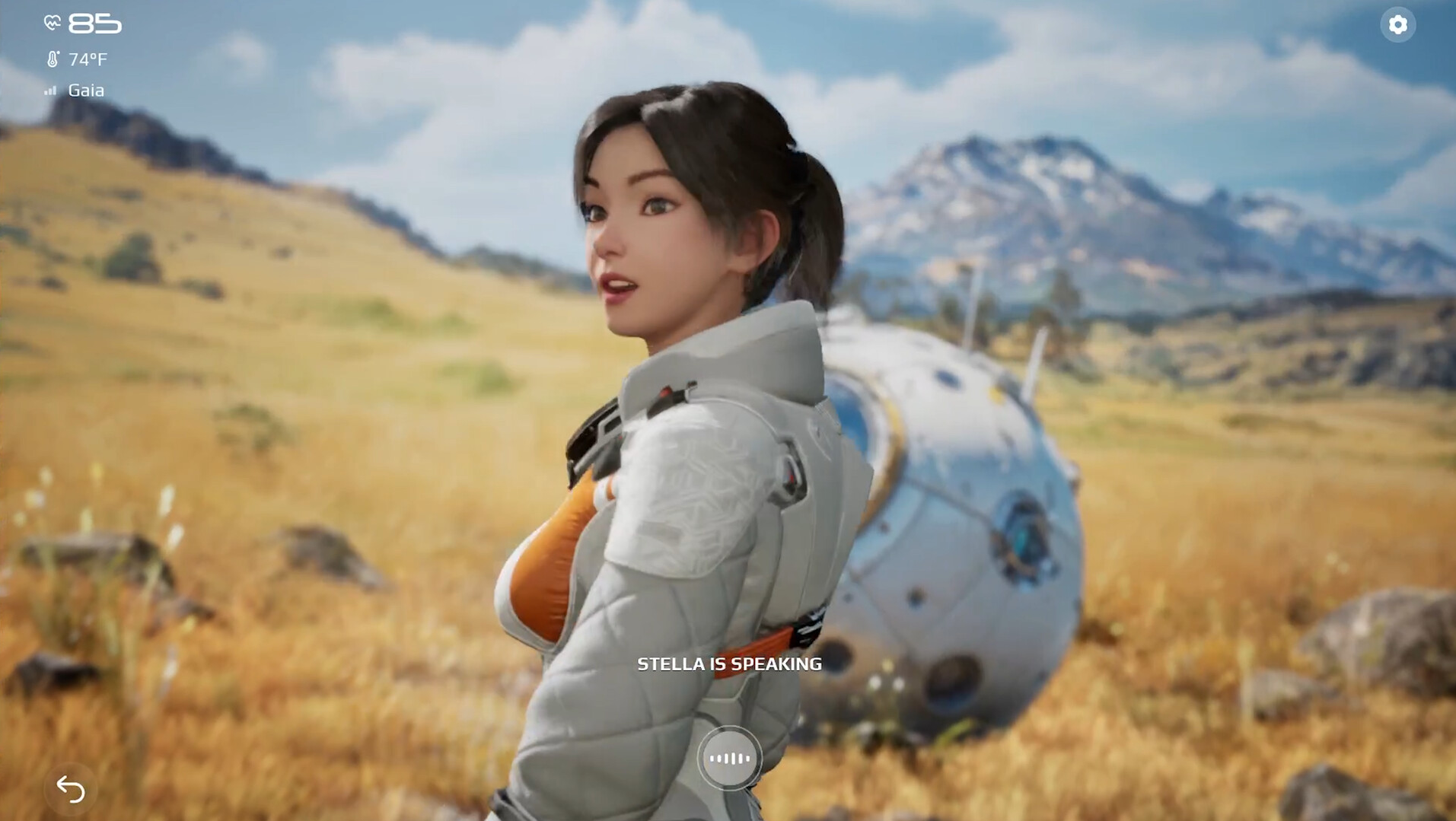
Being in the Visual Novel development community, quite a few have wondered if it would be possible to integrate AI into a visual novel game. Instead of choices to choose from, an AI engine would be capable answering any question related to the situation, and any question not related as well.
It’s a big concept, and recently an independent game developer studio Anuttacon actually did it. The game is called Whispers from the Star
From what I can tell, this is built with an ethically sourced LLM. It would have to be, a giant LLM filled with random data could go off into dangerous directions.
I’ve watched several “lets play” videos of the game where players were messing with the AI. This was inevitable as “hacking” games is a built in draw for many players. In fact at least half of the videos playing the game are trying to mess with it. The makers have heavily limited the possible responses to avoid such mistakes, but the LLM will still get confused in potentially funny ways.
I have not played the game myself, I don’t even own a microphone. I am mostly curious about how such a game was made and how players react. Is this a game concept that could hit big? Or is it a concept that is too off putting?
From the Steam page, it is getting very positive to mostly positive player reviews, but as of this writing there are less than 1200 reviews. So the people that found the game seem to like it. It’s priced at $10 US, which is fair for a theoretically* short game. (*more on this later)
The “waifu” main character named Stella is likeable and charming, and you can’t help but want to help her survive.
I’ve been watching “Let’s Play”s on You Tube just to see what public reaction would be to this game in the eyes of that community, and it’s largely negative. Having been exposed to that side of the gaming community, I understand that it’s not the games fault for their negativity.
Of these, my favorite is where someone got an AI to play the AI game. The two AI’s got along well, but not much actual plot progress happened.
But then there are the sincere reactions.
The “let’s play” reactions I am most interested are the ones where players are really trying to understand the game and it’s objectives. There has never been a game like this so it should attract a genuinely curious crowd. Some observations:
- People are genuinely confused by the game’s interface. No controller needed and limited keyboard and mouse interaction. You talk to the game to play it, and it answers back.
- Slightly more confusion comes from the GUI. It is played in two windows one is a video chat that is not designed to be full screen (a fact many players hated because it messes up their streaming method), and a chat window which is designed to look like a phone chat, but being a PC game is obviously not.
- Like a standard visual novel, the “game” is a series of logic puzzles you help the main character solve. Obviously, the objective is to ask questions about the environment and find a simple solution, but Stella is not always forthcoming enough with her descriptions. This consistently led to player frustration.
- The game’s work around is after so much time with no solution, Stella solves the problem herself. A surprisingly necessary game conceit. Funny that the above video of AI vs AI solved more of the logic puzzles than any human could.
- Stella love small talk, always asking personal questions to fill the dead gaming space between puzzles. Gaming streamers hate small talk as it wastes gamers time. Almost every “let’s play” reaction ended in frustration because of this. No sincere player got through the fairly short game in one session, and there are practically no “part 2” let’s play videos.
My impression is solidly mixed. This is a “proof of concept” game, and it hasn’t gone over very well. Some of the reasons are not the game maker’s fault. There is a lot of general negativity toward AI these days and people’s frustration with chatbots shows through.
There is also the newness of the game concept, the fact that you talk to the game instead of choose from menus or simple text interface. Whispers from the Star is at it’s heart a classic adventure game with an added AI interface.
I was a big fan of text adventures back in the day, I played the original ADVENT (aka Colossal Caves Adventure) and had several Infocom games in my Commodore 64 days. These old adventure games is what inspires my visual novels.
This is the gaming tradition that Whispers from the Star is aiming for.
The central complaint back then was the game didn’t understand most player’s instructions unless they were typed just right. Some games like Infocom’s “Hitchhiker’s Guide to the Galaxy” would make jokes at your expense when you typed wrong. But that was all part of the game. Finding a verb and noun combination that worked was the fun part of the game.
Whispers from the Star has the exact opposite problem. It understands most of the player instructions right or wrong, making it difficult to tell if you are going the right way or not to solve the problem. It would actually be helpful if Stella would say “I don’t understand” more often when the player is going too far off the path.
Also text adventures kind of faded out of existence about 30 years ago, so most gamers today don’t know what they are or how to play them anymore. This is why hand holding the player through is so important.
I think the makers, Anuttacon, are on the right track, but the AI “gimmick” is distracting from the game play. While it’s partially based on an old concept, the AI interface it too innovative and misunderstood. The lack of sales is likely going to kill the concept before a game developer finds the right balance.
How future AI games need to work
I don’t know how the game is set up internally, but it seems to me there’s a missing layer of communication in this game. The game should internally work like a traditional graphic adventure, the drop-down menu kind, and the AI game should work internally like an interface to a menu.
Like the game starts with a crash landing of an escape pod, and the door is jammed. The way a graphic adventure would work is with a list of suggestions to choose from: push really hard, check the door’s edges, find the pod’s manual, check your inventory for tools, etc. The AI interface should focus on the pre-selected menu items, making suggestions to try if the player can’t think of any, explaining why something didn’t work when the player guessed wrong.
By being too open ended the game confuses the player, and too much confusion leads to the high amounts of frustration.
In other words, you can’t rely on the novelty of the interface to make the game playable. The interface should only add a layer sophistication to a traditional game, rather than overtake the game.
There’s a reason why truly innovative games don’t prosper. Players prefer familiarity.
 Date Ariane Games