
The Enemies of Creativity
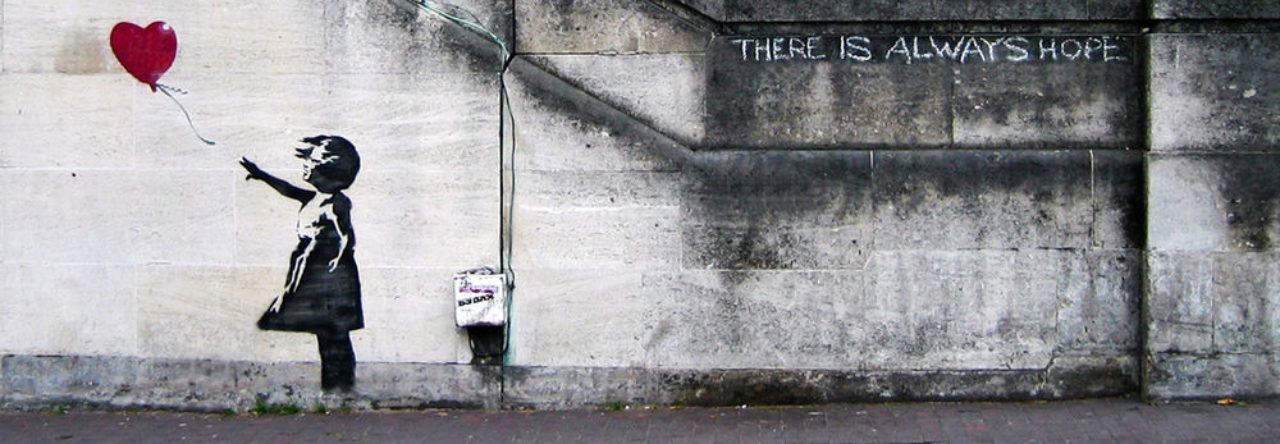
This is my third essay on the subject of creativity: an unbreakable grand narrative because it’s tied to human nature.
In Part 1 Creativity is the Driving Force of Life I focused on creativity and art as only one of two positive grand narratives left in the post-post-modern society (the other being curiosity and science) in which we can engage to make our lives feel meaningful.
In Part 2 Creativity is the cure to nihilism I focused on the destructive force of nihilism that seems to have taken over culture since the fall of post modernism. And break down the futile attempts to stop nihilism to make people feel better about themselves, and how focusing on creativity tops them all.
Now that I established how important creativity is to our lives and our society, the next step is to look at why it is not a priority in society now. In part 1, I added a couple of paragraphs about how curiosity and science are attacked on all sides by ignorance and people with bad agendas. This is where I do the same to creativity because, as it stands now, “creativity” is only a priority when there is money to be made.
Enemies of Creativity #1: Capitalism
Capitalism is the biggest enemy of creativity, and as I explain the other enemies, you will see capitalism is behind all of them too. That is because capitalism’s reign of terror over the creative mind was first pointed out in the 1940s, and vilified as “cultural marxism” by the capitalists. The authors prefer the term “critique theory”. Nothing has changed in the 80 years since.
This video by Plastic Pills is an entertaining summary of the work by Adorno and Horkheimer who fled Nazi Germany, and in 1941 wrote a criticism of American culture called “Dialectic of Enlightenment”
The video in summary: Adorno and Horkheimer see American culture’s mass media entertainment as uniform and unoriginal. Their criticism can be understood easily at the time of their writing (1941) with the influence of the grand narratives of modernism dictating virtuous themes, the censorship of movies during the Hayes code, and similar cultural censorships found at the time in other media. This restricted art into only certain kinds of entertainment that dominated mass media in 1941.
And yet as censorship and modernism have disappeared, with society growing more adult friendly and “post modern”, their themes of pop culture dullness and sameness still ring true today, just in different ways.
“Culture today is infecting everything with sameness. Film, radio, and magazines form a system. Each branch of culture is unanimous within itself and all are unanimous together. Even the aesthetic manifestations of political opposites proclaim the same inflexible rhythm… all mass culture under monopoly is identical.
Films and radio no longer need to present themselves as art. The truth is that they are no longer anything but business used as an ideology to legitimize the trash they intentionally produce.”
“Real life is becoming indistinguishable from the movies” and Hollywood films are responsible for “the stunting of the mass media consumer’s power of imagination the culture industry as a whole has molded man as a type unfailingly reproduced in every product… not nuanced in any way.”
“Dialectic of Enlightenment” by Adorno and Horkheimer
In the US mass media is controlled largely by 5 companies: Disney Fox, Viacom Paramount, Warner Discovery, Comcast Universal, Sony Columbia. Outside the US there may be other local creators, but a lot of them buy content from the US and localize it. Notice how all five are the result of mergers. That’s the problem. They keep merging and getting more powerful. These mega entertainment companies need to be broken up into much smaller sizes.
Mass media is even pacifying rebellion toward its agenda with cathartic entertainment that sells a lot of tickets.
Owners don’t think we’re stupid–they know we’re not happy and they know we’re not blind, so the culture industry co-opts our dissatisfaction with the status quo by incorporating notions of rebellion or calls for social justice into their products.
This is called catharsis and goes way back to Aristotle’s aesthetics… Catharsis gives us the sense that we’re participating by feeling the emotions displayed to us in entertainment even though they aren’t our own emotions.
Advertising deploys the sentiments of social justice so that we can feel like consuming products is participating in those causes, when the roots of those causes are part of the system maintained by those same owners of production. And thus being entertained we never have to go so far as to act on them in any way.
So Mark Fisher explored this idea in Capitalist Realism, which argued that consumer capitalism has become so pervasive in modern society that even having explicitly anti-capitalist or pseudo-revolutionary themes in pop culture doesn’t affect the ownership problem in any meaningful way. In fact, it actually reinforces it: obviously symbols of rebellion don’t bother them in any way.
“The Culture Industry” by Plastic Pills
The Plastic Pills video cites “Joker (2019)” as an example of a cathartic film. After watching Joker, the only theme in the movie I could find was “Society is responsible for the problems of society”. Simplistic, but at least there is some vacuous truth there.
How can pop culture art be considered so “uniform” by critics when there is so much variety? There are some good media that is original, but most of the “variety” available in mass media entertainment is based on illusion. The market is big enough to support real variety, but it makes what has proven to sell in the past the mainstream. The obvious problem is the reliance and repackaging of nostalgia in the form of prequels, sequels, reboots, adjacent source material (aka Universes), and live action remakes. But that is not all:
You might have heard of things like the “three act structure” or the “Heroes Journey” plot, or the way TV episodes always resolve any changes to characters or relationships between characters before the end of the episode making episodes interchangeable. Most popular music uses very familiar chord structures, and “verse, chorus, verse, chorus, bridge, chorus” song patterns.
We have gotten so used to these things that anything that doesn’t follow these patterns like Asian movies that follow kishotenketsu story structure instead either seems revelatory, or off putting. So mass media artists usually stick with the “sure thing” formulaic plots locking the cultural sameness in to get people to pay and watch.

Enemies of Creativity #2: Religion based censorship
Back in the 14th and 15th centuries, “The Church” was one of the biggest supporters of the arts, that is as long as art had religious themes. There seemed to be a lot of religious themed nudity in art, which the church eventually started to “fig leaf” over.
Well it is still happening, thanks to ultra religious heads of banks, who cut off artists they disapprove of even when the art they create is perfectly legal.
I work in an industry of erotic gaming. There are rules in this industry that seem very vague and are easy to get on the wrong side of, and getting on the wrong side can lead to getting cut off financially. We make content using drawing or 3D art. No real models are being used in the making of our games, so even when our characters are portrayed as victims, there are no actual victims.
Personally, I stay clear of the questionable content keeping everything consensual and ADULT oriented, but my games are considered “tame” by comparison in the industry. Less tame content sells better, but I don’t care to follow those trends. Still I support all the creators that do anyways, because I know one day standards will change yet again, and I’ll be on the wrong side. The laws of the US say all of this content is legal because no one is being harmed by making it, thus legal under first amendment.
And yet the “legal” lines are considered too lenient for those that control the money. And artists are getting cut off platforms to sell their games, making a living impossible. It is not the platforms fault, it is the banking institutions at fault. The ultra right wing leaders at Visa, Mastercard, and PayPal control who gets to pay and who gets paid.
Right now there is a Supreme Court case involving censorship on social media platforms. Could this apply to banks too? I hope so. The censorship of Tumblr, and Imgur, the recent almost censorship of Only Fans, the restrictions seen on social media are not the decisions of the web sites, they are the decisions of the banks that service providers rely on to get paid.
Whether you think such content should be banned or not is beside the point. The religious view that erotic art should be banned because it influences real life behavior is wrong. In fact, studies show it does the opposite. With the internet bringing porn to a mass audience, all we see is a decrease of sexual assault crimes, not an increase. People can get their evil thoughts quelled without causing any harm to innocent victims. I’ve written about this extensively in the past.
The bigger point is this: What sex and violence happens in art, whether that art be movies, TV, pictures, online videos, games, etc. is all fake or at least consensual. It’s all acting and special effects. Millions of fake NPCs murdered every day in video games does not translate to more real life murders. In fact video game and movie violence tends to reduce real life violence.

Enemies of Creativity #3: Artificial Impersonation
Artificial Impersonation is my term for what the world is calling “artificial Intelligence”, because I don’t consider computer algorithms to actually be intelligent. AI systems write by impersonating millions of writers scooped online. AI systems make art by impersonating millions of artists works scooped up online.
What the AI industry wants is AGI, or Artificial Einsteins that are smarter than most humans, and there are not millions of Einsteins online to scoop up.
But lets not get distracted by the technology. The real problem is that AI writes stuff and creates pictures without human creativity by impersonation of human creativity. If as I have been saying, acting creatively is a source of joy, then AI doing the creating is not bringing any real joy to anybody except non-creative managers that prefer computers to people because they are cheaper.
My idea of a creative society means the creative people will have to compete with the AI generated stuff. The future is cloudy on this. Right now AI generation feels “soulless”, its writing is weak, its art is impressive at first, but feels more generic as you see more of it. Legal obstacles can get in the way of its development, and we don’t know exactly what the future looks like yet.
If creating art in its many forms (see the last essay) can be enhanced by incorporating AI, then its use becomes a matter of quality, quantity, or how much fun it can be. To reiterate again, I’m advocating for creation of art that brings us joy in creating it, and letting computers do it all for us does not bring much joy.
AI’s affect on human creativity can be anywhere from minimal to devastating, and it is going to take time to figure it out. This is probably the most dangerous of the enemies to creativity. If we let it, it can largely wipe out any profit motive for any artist creating art that can be impersonated by these dread machines.
One effect is that artists now feel the need to prove their art is human created, which is a lot of work for them to do.
Enemies of Creativity #4: Art Investment
Artists, especially those in the creative field, often find themselves vulnerable to exploitation by art market buyers. Here’s some of the ways this occurs:
- Low or No Pay: Many artists, especially emerging ones, face situations where they are asked to work for exposure rather than fair compensation. Event producers, venue owners, and companies may offer exposure as a substitute for payment, leaving artists struggling to make a living from their craft. Even when they are willing to pay, the pay may be low by the buyer because passion is its own reward.
- Credit Denial: Artists often encounter situations where their work is used without proper credit. Whether it’s photographs, designs, or music, the refusal to acknowledge an artist’s contribution can be demoralizing and financially damaging.
- Real Estate Developers and Rent Hikes: In cities like New York, real estate developers intentionally seek out artists to lease raw work spaces. However, once the building is renovated, they impose rent hikes, leaving artists struggling to afford their studios.
- Record Labels and Advances: Musicians signing record contracts may exchange their royalties for advances on sales. While these advances can be substantial, the math often favors the record label over the artist. Often the musicians themselves pay for studio time to make the records. Streaming services like Spotify do not pay much in royalties either.
Even if we accept the notion that art can be enjoyable in its creation, artists still need support, not exploitation. Using art must ultimately involve paying the artist that made it fairly.

Enemies of Creativity #5: Copyrights
I guarantee that every creative artist has had a problem with copyrights or trademarks at some point. In making visual novels, I have become almost hyper aware that I need to be careful what art I use, if i have a license for it, and if my mention or display of a famous product constitutes a fair use in my games.
YouTubers and Tik-Tokers deal with it every time they upload a video. Stuff gets copyright flagged, and every copyright holder treats each situation differently. Suddenly, that cool dance video you made has no music on it, or you get no money for a video you spent weeks on.
That’s why I use public domain and wiki commons as much as possible, and buy commercial licenses to all art and music I use in my games, and make sure I have all the attribution names if I use creative commons art or sound effects. Yeah my site and games probably aren’t popular enough to get flagged by anybody, but I don’t want to take any chances.
Big corporations have developed strict copyright laws that have only gotten worse as the internet grows. 95 years to reach public domain is a long time. The movie “His Girl Friday” (1940) is a great old flick that lost its copyright when Columbia failed to renew it. But it still wasn’t in public domain until January of this year because the dialogue of the movie came from a 1929 play that only just went into public domain. So now us creative types can use it in our creations.
More famously, “Steamboat Willie” the first Mickey Mouse cartoon entered public domain this year too. But if you try to publish it or derive new IP from it, don’t dare use the name “Mickey Mouse™” as that is still trademarked by the Disney corporation.
Establishing a “creative society” would be a lot easier with more relaxed copyright laws. Personally, I believe 50 years is enough. If the golden age of Rock were under public domain, that would make life and art so much more interesting today.
The fight is on and things are changing
I would not be surprised if there is a big copyright fight as the legitimacy of AI reaches the courts. Laws regarding “fair use” may even change, hopefully for the betterment of us creative artists.
The latest salvo of this battle was announced by Wired in an article “Here’s Proof You Can Train an AI Model Without Slurping Copyrighted Content“
Two announcements Wednesday offer evidence that large language models can in fact be trained without the permissionless use of copyrighted materials.
A group of researchers backed by the French government have released what is thought to be the largest AI training dataset composed entirely of text that is in the public domain. And the nonprofit Fairly Trained announced that it has awarded its first certification for a large language model built without copyright infringement, showing that technology like that behind ChatGPT can be built in a different way to the AI industry’s contentious norm.
“Here’s Proof You Can Train an AI Model Without Slurping Copyrighted Content” by Kate Knibbs for Wired.com
I do not know how better or worse such a copyright free large language model is to OpenAI’s ChatGPT or Google’s Gemini, but now that is provably possible to make LLMs copyright free, it needs to become the norm.
This LLM was backed by the French government which is also spearheading an anti-AI law in the European Union.
The European Union has started the inevitable legal restrictions in AI tech with a new law that takes effect next month.
The new rules ban certain AI applications that threaten citizens’ rights, including biometric categorisation systems based on sensitive characteristics and untargeted scraping of facial images from the internet or CCTV footage to create facial recognition databases. Emotion recognition in the workplace and schools, social scoring, predictive policing (when it is based solely on profiling a person or assessing their characteristics), and AI that manipulates human behaviour or exploits people’s vulnerabilities will also be forbidden.
I’d like to see more restrictions, but it is a meaningful start.
Moving towards a more creative society has a lot of roadblocks to get there, but we are getting there one step at a time. We know where the battle lines have been drawn, and we need to either move them or enforce them. Big corporate interests will be lobbying on all sides.

Want to be more creative?
While writing this essay, some interesting book reviews got my attention:
I Used to Cringe at Self-Help Books. Until This One Changed My Life. By Jillian Steinhauer The New York Times is a recent review of “The Artist’s Way” (1992) by Julia Cameron. Short blurb if you hit a paywall:
As it turned out, the beauty of “The Artist’s Way” was in asking people like me to set aside matters of taste entirely. Instead, Cameron prompted me to turn inward. One of her two core practices is the morning pages, writing three longhand pages upon waking up, which Cameron says “get us to the other side: the other side of our fear, of our negativity, of our moods” by creating space to contend with them. The other is the “artist date,” a weekly solo excursion or activity meant to cultivate inspiration. I didn’t always manage to do these tasks, but I recognized their value. I had arranged to do “The Artist’s Way” with a small group of women, and as one of them put it in a meeting, the exercises offered a way of witnessing ourselves.
Cameron’s writing encouraged that exploration. She spoke plainly and directly, without elaborate flourishes and conspicuous erudition. I came to appreciate the book’s many flaws: There was something refreshing about a text that didn’t need to be perfect, that came from a place of urgency. She said what needed to be said — and when she did, I often felt as if she were seeing and dragging me simultaneously.
“The Rick Rubin Guide to Creativity Can the legendary record producer’s book really make you into an artist?” By James Parker for The Atlantic is a review of “The Creative ACT: A Way of Being” by Rick Rubin. Short blurb if you hit a paywall:
The Creative Act is three books in one, really: a how-to for aspiring or faltering artists, an opening-up of Rubin’s own bag of tricks as a producer/cosmic facilitator, and an account of the spirituality that defines his method. It’s been a fixture on the New York Times best-seller list since its publication in January of last year. …
Why? Why is there such a turned-on audience for a book that contains lines like “The outcome is not the outcome” and “We’re on a distant metaphysical journey from the here to the now”? Well, partly because there’s always an audience for that kind of book. But more specifically, because Rick Rubin knows what he’s doing. …
Also: His book is not just for musicians. It’s for everyone. To a slightly insane degree, in my view. We’re all artists, Rubin says, all creators, every one of us, because—as human beings—we perceive. “In each moment,” he writes, “we are immersed in a field of undifferentiated matter from which our senses gather bits of information. The outside universe we perceive doesn’t exist as such. Through a series of electrical and chemical reactions, we generate a reality internally.”
Now, call me old-fashioned, but I find this claim—that we are all adrift in a species of electrified data-porridge, inexplicably endowed with something between our ears that converts it into trees, boyfriends, penguins, slices of pizza, etc.—rather astonishing.
Nevertheless, from this (to me) dubious starting place, Rubin proceeds to lay out a very clear and helpful and thoroughly road-tested vision of the stages of creativity. Energy, the raw stuff of creation, is coming at you all the time, in hints, clues, rhymes, or blasts of inspiration. The trick—or the great task—is to make yourself available to it, and then, with craft and cunning and stamina, convert it into art. And although stylistically The Creative Act has a light furring of New Age waffle—there are warm breezes, and hummingbirds, and flowers blooming in the trueness of their flowery nature—once you go through that, it’s bare-bones practical, even stern.
I haven’t read either of these, but I want to. I want to be more creative. I love the act of creativity, it simultaneously calming and frustrating. Based on these two reviews, these authors seem to be on same track approaching the subject from different perspectives.
Barnes&Noble (sorry Amazon, I hate you) also recommends:
- Creativity, Inc.: Overcoming the Unseen Forces That Stand in the Way of True Inspiration by Ed Catmull, Amy Wallace
- Big Magic: Creative Living Beyond Fear by Elizabeth Gilbert
- Originals: How Non-Conformists Move the World by Adam Grant
 Date Ariane Games
Pingback: Creativity is the cure to nihilism | Date Ariane Games