
Starfield: The Most Expensive Visual Novel Ever Made

I’ve been playing Starfield a lot over the last six weeks or so. It has become a very controversial game with a lot of people loving it and a lot of people hating it. I’ve loved it enough to play it a lot, I mean a LOT. Made like 5 characters replaying quest lines. So yes, I love this game.
But I have also played it enough to know what the “haters” are saying, and except for the Bethesda haters and the “pronoun” haters, I kind of agree with what the actual thoughtful people that don’t like it are saying.
The game can largely be divided into five categories, each with their own game loop mechanic: ground combat simulation, space combat simulation, exploration, designing and building ships and outposts, but far and away, the largest is: the visual novel.
Some call this last part “questing”, but as a 20 year visual novel vet, it is essentially visual novel game play, especially the way Bethesda does it, with the camera pointed directly at the character’s head and you the player reading and hearing dialog and making choices from a menu. I’m not a huge Bethesda fan, but I have played enough Oblivion and Skyrim to know that those use a similar mechanic for it’s quests, but Starfield is the most blatant visual novel like game of the bunch. Quest dialogs in Skyrim are few and far between, but in Starfield, it is most of the game.
And so much of this game is visual novel like: The main story and all 4 faction paths, stores, and side quests use the same game play. Of those 5 categories of game play I mentioned, you are guaranteed that at least 50% of your time will be in visual novel mode. For most casual players who don’t bother with outposts or ship building, it’s closer to 90%.
Make the moving characters static (which they may as well be), and most of the Starfield quests could be built in Renpy.

The other 4 playing modes
A quick review of the other player experience modes in order from best to worst.
Best: Ground combat. Well done, and there is so much flexibility in weapons and play style to suit any combat game veteran. Personally I love the Stealth game (the secret is “Chameleon” mods stack, put a chameleon helmet and boost pack on, and every time you crouch, you are essentially invisible to everything — just don’t move.), and Laser/Energy weapons. Most people love the big projectile firing guns, but most enemies are also immune to those. Very few enemies have immunity to energy based weapons, so lasers tend to do the most damage.

OK: Building ships and outposts. Yes it’s buggy and not very well documented, but so is everything else. Once you understand the basic concepts though, this is a great way to level up fast. And if you don’t need to level, you can use the same techniques to farm or mine resources you keep running out of (see picture above).
Also OK: Space based combat. A normal casual player will likely have a lot of fun in space combat, but once you understand the mechanics, you quickly become an unbeatable god-like combat player and it becomes pointless. Bethesda needs to boost certain weapons, and nerf the hell out of others, or nobody will care about this.
Lame: Exploring. During the first couple of weeks most people found the experience of exploring other planets aspect to be “amazing” because of how much “procedurally generated” content is out there. But after about the 2 week mark, you start to realize how “copy/paste” it all seems, and the “amazing” reactions quickly fade to “this again?”
It also doesn’t help that every time you go some place new your ship is going to park about half a km away and force you to run and jet-pack through lame environments for about 10 minutes. Once you visit some place you can fast travel there, but most will not be places worth traveling back to.
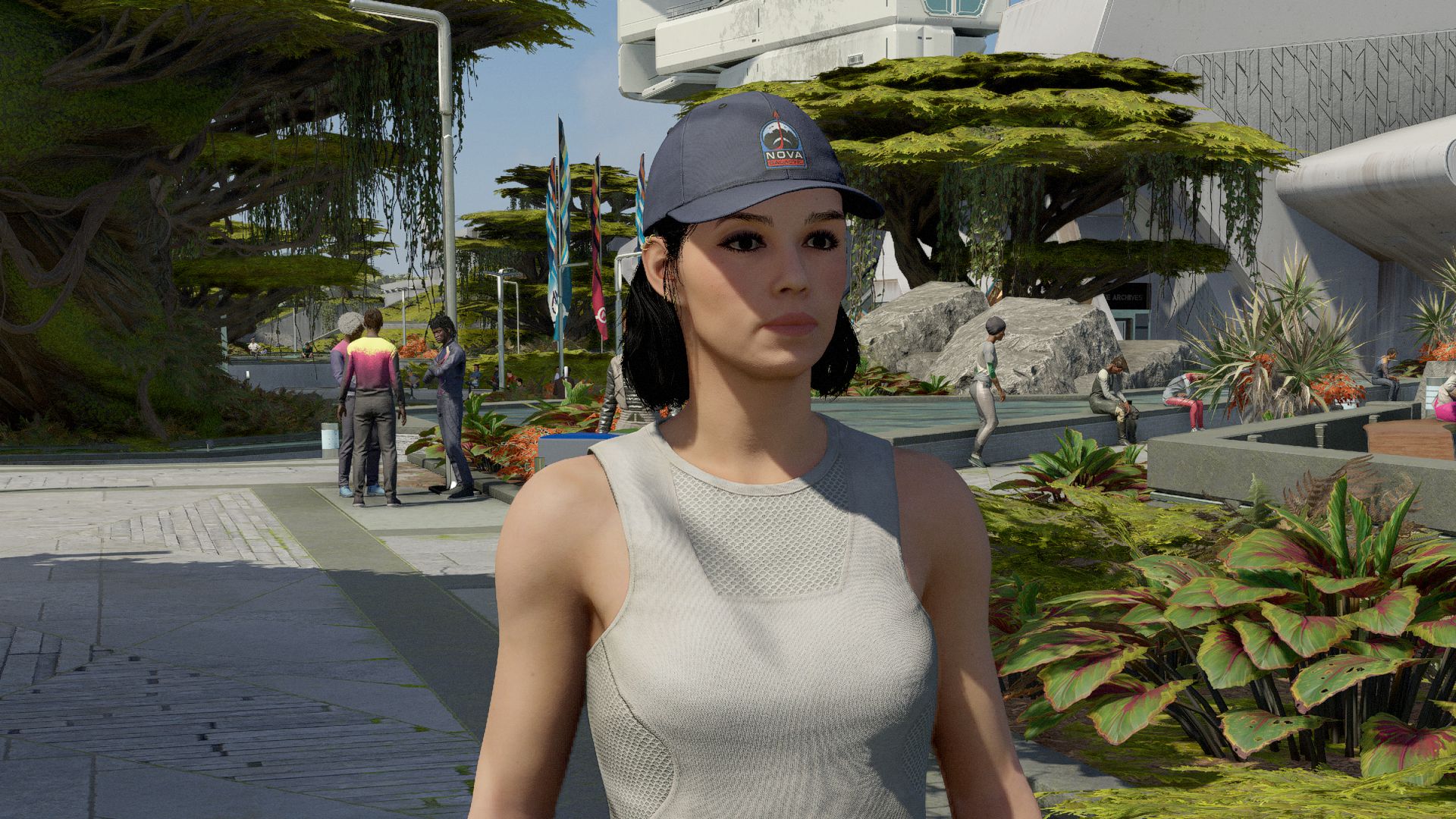
My Experience
For the first month, I was switching between 4 different characters so I could see all the content. First observation: Not all the content is good. There is some very good content: The UC Vanguard is the best written story (many wish it would have been the main story). The Freestar Ranger quest line is pretty good too, and the final reward is awesome. From a story telling perspective, the Ryugen faction story is mediocre, but the quests themselves involve very different mechanics (stealth, subterfuge, non-lethal combat, and manipulation) than the other quest lines, and for that reason, I love playing it.
The UC vs Crimson Fleet quest line is only slightly better than the main story (which is the worst, I’ll get to it), but there are quite a few fun individual quests, and in the end you make a choice between two bad things: You can join the UC group that destroys Crimson Fleet for fun, thus giving you a lot of combat missions to fight, or you can join the Crimson Fleet which makes a third of all the combat missions meaningless, but you get access to a lot more “contraband” buyers, so you can make money from scavenging. Either choice is lame actually, which is why I haven’t even done it yet on my current play through. Either way you are rewarded 250,000 credits, which can be a kingly sum depending on when you do the quest chain, though I haven’t even started it and I am already at over 500,000 credits.
Speaking of which, at the beginning you get to choose 3 traits, and you never get to choose again. Take “Alien DNA”, it makes food worthless, but food already is worthless, and gives you a decent health boost. Take “Dream Home”, it may sound like a bad deal to have a 125,000 credit mortgage at the beginning, but it is only a 500 credit rental which is very affordable AND later in the game it becomes worth it: The “Dream Home” is the only player housing without a contraband check, means you can store valuable resources there. Also later in the game paying off the mortgage is easy. The third trait can be anything you want. I tried “Adoring Fan”, “Kid Stuff”, and “Wanted” on 3 different characters all of which provides content you can’t get unless you choose it, though “Wanted” is the best of those 3.
I decided a couple of weeks ago to create a fifth character, and I am playing it without any cheats (even though the character is considered “modded” already because of a trivial mod the game was using at the beginning, and Bethesda’s illogical “anti-cheat” mechanics are lame), but the purpose of this character is to play the game “normal” (literally that’s the level), using all the non-exploitive tricks I learned from the first four characters. No wasting my precious and rare skill points on skills that sound awesome, but turn out to be lame.

The Main Story has no second act
My first character just plowed through the main story. The first couple of missions are tutorial in nature, so good on the first play through, and super lame on subsequent. My advice: Slow down! Take your time. The next three is where you meet all the main characters: Sarah, Andreja, Barrett, and Sam. They are definitely fun and worth doing, with the last being a moment where you learn what the game is about.
The 6th mission called “All That Money Can Buy” is where the main story goes terribly wrong, and is where many players start seeing the game’s flaws. Play it once so you can experience it, but my subsequent plays, I literally skipped over the middle section, by skipping ahead to Hyla II, which starts you at the end of the 12th mission, skipping some ugly lame missions, and giving you only 6 generally good missions left.
New Game Plus
I did do new game plus on one of my first four characters, just to see what the deal was. Only the first level. There are officially 10 levels, but they are grindy as hell, so I didn’t bother past the first. You get: 1. A cool looking ship you can’t edit, that is lame in actual dog fights. 2. A cool one piece armor that you can’t edit, so it is lame, too. 3. You can keep all your skills and levels, but everything else get’s reset to the beginning (about 20K in credits and the starter ship).
New Game Plus is a lame “trendy” multiverse plot that allows you to go to another universe where nobody knows you and start again. In other words, it’s a way to play the game again that doesn’t involve rolling a new character. Something I kind of already did in Something’s In The Air Redux. (That was the “redux” part).
I’m not doing NG+ again until enough time passes that I am ready to jump in to the beginning again and start a new character and play run. NG+ is the easy way to do that without having to re-level, but every NG+ is also an increase in difficulty for the game, so re-leveling might be the way to go.

The Most Expensive Visual Novel: Friend, I’ve gotta confess I’m not much in the mood for conversation.
The visual novel aspects would also go into a “best” rating as I mentioned ground combat was. As a fan of visual novels I am fine with it, and I have been using the experience to help write my next game (what I call “research mode”)
Starfield is 50-90% visual novel, and visual novel game play is not for everybody. Especially not for a “Triple-A™” title from a major game developer. I think more than anything this explains the game’s current “mixed” (63% positive) reviews are saying.
Ultimately, this was a mistake. Another game I play is Guild Wars 2, and it really wishes it was a visual novel because there is always a lot of lore to try and explain. But it doesn’t go there. It uses “books” and optional background NPC conversations to explain the lore if you are really interested, so most of the game play can focus on the combat which is what the average player really wants to focus on anyways. Starfield should have copied this.
The mission I am playing above is about the dangerous Ashta which roam outside of Akila City at night and two characters with different plans to track them. It should have been significantly shorter because the Ashta is a problem noted in at least 3 other missions, and I don’t need it explained again. That is one of the shortfalls of the visual novel game: over explanation.
When I have a long explanation to do in one of my games, I add an alternate route that is much briefer and shorter. Like in Something’s In The Air Redux, when you take Ariane to the restaurant at the beginning, you can ask her about her day — which is comically long, or you can talk about your day that is very short. It’s a balance trick I use a lot. Another is you break it into pieces with different dialog choices to explain each piece. Starfield sometimes does this, but not often enough.
Also the romance in this game is so bad that me, an aromantic, considers it lame.
Ultimately the problem is one of balance. Too much dialog, not enough combat. The exact opposite problem I saw in another “mixed” reviewed “Triple-A™” title I played this year Watch Dogs Legion by Ubisoft. It’s balancing problem was that you could just kill everybody in every mission to win the game, and that’s how most people played it, missing the very well planned stealth and combat avoidance aspects of the game that makes the game much more fun. Ubisoft didn’t seem to care, the DLC focused on the Kill Everybody strategy, and with a year, Ubisoft closed the entire Watch dogs franchise down. What a waste!
I have a feeling the “balancing” problem is going to be the ruin of Starfield, too.
I wish more game developers would learn these lessons, and take them to heart.
 Date Ariane Games