
How I learned to stop worrying and embraced metamodernism
Metamodernism is the latest movement in art and philosophy after a century of modernism and post-modernism. To explain what is going on I need to explain all three.
It is important to note up front what modernism, post-modernism, and metamodernism really are, and what they are not: They are not visions of the world to show how the world should work, quite the opposite actually. They are schools of thought that try to explain how the world already is, recognizable patterns and explanations that may lead to prescriptive solutions to social problems, but do not serve a role in what those solutions are or how to implement them.
Modernism
My take is that modernism is about using grand narratives to establish society. Capitalism, marxism, fascism, nationalism, patriotism, enlightenment, rationalism, etc. are part of those grand narratives that demand compliance to achieve stability in society. Modernism is the result of the industrial revolution in the 19th Century, ushered into the 20th century. Modern art is the art of Picasso, Frank Lloyd Wright, Norman Rockwell, Frank Capra, and Alfred Hitchcock, art nouveau and art deco.
There is a lot of good stuff in modernism which is why it dominated culture from 1920 until around 1980. But modernism has a fatal flaw: a demand for conformity. The modern world works best when everybody involved thinks the same way, or at least pretends to think the same as part of some shared societal fiction.
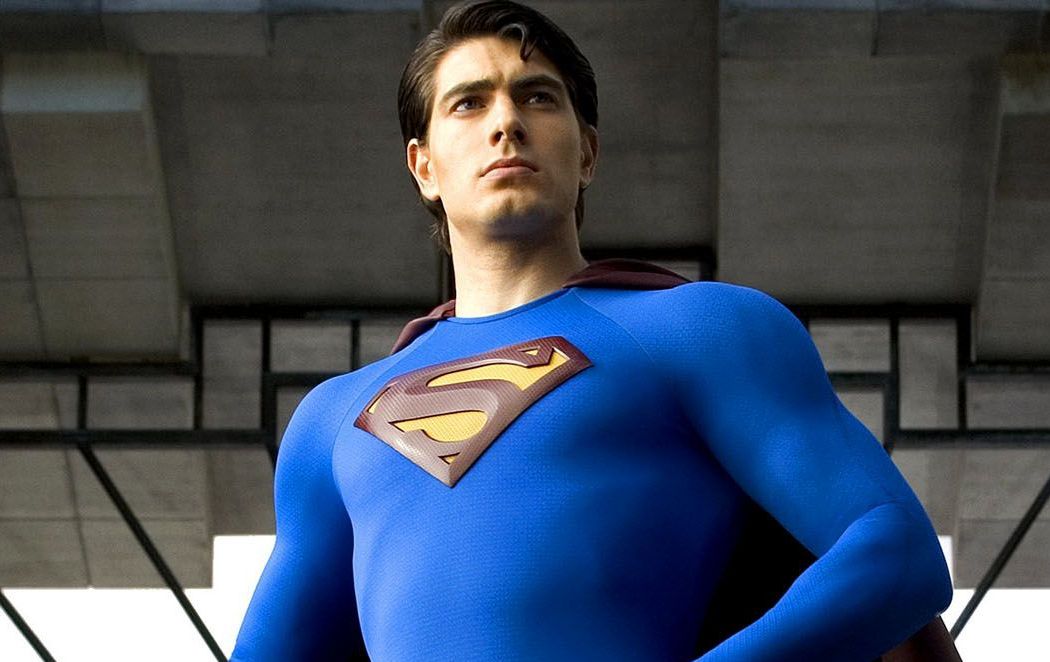
Superman is a MODERN superhero. He is the most powerful of the popular heroes, probably a little too powerful, with only two weaknesses: kryptonite, and he cares about people. Superman is generally a nice guy with a traditional rural middle of America upbringing. He is a symbol of hope who cares about humanity.
Every representation of Superman from the Fleischer cartoons of the 1940s to Superman and Lois on the CW has presented Superman essentially the same way.
Modernism also cares about people and worked to make life as good as possible for as many people as possible.
The weaknesses of modernism are pretty well known at this point. The first is a reliance on grand narratives that not everyone agrees with. America wants to think itself as a uniculture of married couples with 2.3 children living in suburbia and commuting to work 5 days a week, but that hasn’t been the reality for some time now, and that “American Dream” is largely dead now. The split in politics these days is conservatives and the GOP wanting to return to modern life with laws focused on Christian values, even though Christianity is not even a majority anymore.
Modernism was mainstream from the 1920’s to the 1980’s, and nostalgia based around these decades is a desire to return to Modernism.
Post-modernism
Post-modernism is the pointing out the folly of grand narratives. Post-modern philosophy breaks down all the grand narratives under modernism, and finds them all lacking. All grand narratives turn to crap eventually, and the post-modernists have been proven right over and over.
That’s where post-modernism gets its start. It is an intellectual movement that as its name implies, is opposed to the conformity in modernism. The post-modern philosophers realized that modernism relies too much on grand narratives to give people meaning in their lives, but starting with the existentialists, the post-modernists proved that grand narratives can only stand temporarily, and will eventually falter. Making your life meaningful in a grand narrative always leads to disillusionment. Post-modern establishes cynicism and nihilism in its world view, with nothing to replace it.
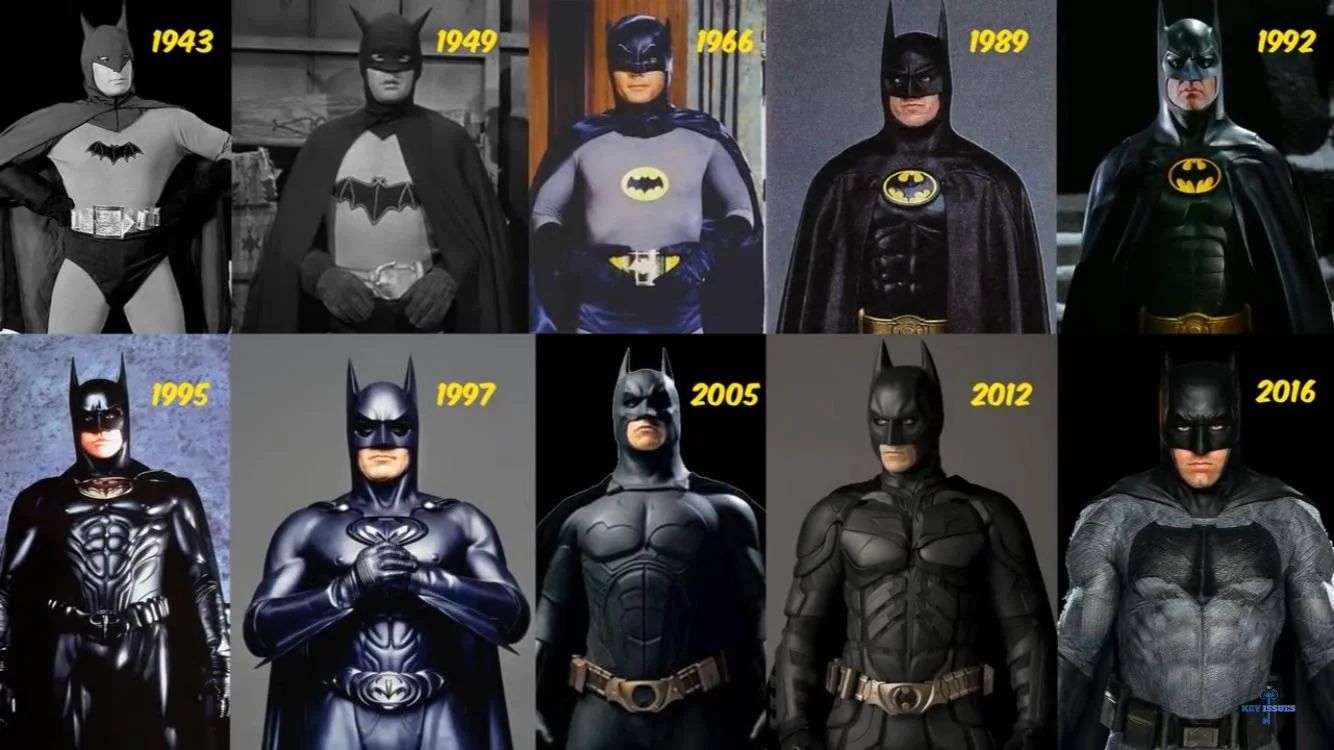
Batman is a POST-MODERN hero. Conceived by Bob Kane and Bill Finger as a mix of early 1900’s Sherlock Holmes, The Scarlett Pimpernell, and a popular 1930’s radio show “The Shadow”, Batman has always been a tragic hero. After witnessing the murder of his parents, he grew up to become a crime fighter. If it weren’t for his amazing rogues gallery of villains, mostly mad scientists who robbed banks, he probably would have been forgotten.
What makes Batman post-modern is that he is constantly changing: from TV sitcom Batman of the 60’s, Tim Burton’s gothic Batman, Joel Schumacher’s camp Batman, Christopher Nolan’s Dark Knight Batman, Snyder’s grimdark Batman, to the most recent Matt Reeves cyberpunk “The Batman”, it all works as the same character.
That is what postmodernism is: changeable, recontextuable, satirical, ironic.
Post-modernism was born from French philosophers in the 1960, and started to become a movement in the 1970’s. It took over politics and business in the 1980’s, and then became the dominant culture in the 1990’s when we got grunge rock, shows about nothing, and movies with plots out of order. Post-modern entertainment is still pretty dominant to this day.
Post-modernism has its own flaws, most notably the way it turns society cynical and nihilistic. American and European society went from industrial driven to a consumer driven service economy and society in the late 20th century.
One philosopher sums it up this way:
What happened from the 1970s in the West, and gathered strength in the next two decades, is not a shift to a new world view or paradigm, but rather the dissolution of any integrated worldview at all.
It’s different from all previous changes which went from worldview A to worldview B. It’s very essence was an attack on the possibility of having a worldview or meta-narrative, as it is often called. It’s the realization that the speed of change, especially in politics and communications, means that there could not be any shared vision, either in the West or the rest.
This explains why it is an attack on all large theories. It takes the form of arguing that we are past them all, and can abandon them. We are “post” or after them.
So structuralism is dead, because it had suggested a fundamental basic structure of the human mind. Since there are no basic and universal categories, we are now post-structuralist. The old political order of a colonial world has vanished with the end of European empires so we have post colonialism. The certainties of feminism which suggested a basic equality, and even identical nature of men and women is challenged so we have post feminism. Marxism with its unified vision of base, determining the superstructure is no longer tenable theoretically and is clearly unacceptable morally as we learn the inner history of the years of Stalin, Chairman Mao, and Pol Pot, so we have post Marxism.
The Enlightenment belief in the triumph of human reason and of the inevitable progress of society and knowledge is untenable, especially after the horrors of the Holocaust so there is post enlightenment — which can also be called post rationalism.
Above all we enter an age of post modernity closely associated with the rejection of the modernist tradition in art which flourished between the world wars. The rejection of modernity which was thought to be the ever increasing rationalization of life into discrete institutional areas: religion, politics, economy, and society, leads to post modernism and post-modernism economies based on consuming rather than producing from factory to services. We now have a post-industrial world. …
There are compensations: it’s a free world in the sense that hierarchy and authority is abolished, it has the freedom of driving around a dodgem Park each person at the wheel bumping into another able to go in any direction. It is creative and exciting. Full of intellectual fireworks, new ideas that shoot up into the sky burst and dazzle for a few seconds and then are gone. It is producing solutions to many problems, and it is increasing affluence and comfort for many.
Yet it’s also deeply unsettling, leading to loneliness and confusion. The game changes every day and people do not understand what the rules are. Intellectually, it is not, as in earlier thought systems, ascending a mountain of knowledge, with a ridge gained as one masters part of the system with further ridges ahead. It’s more like scrambling up a sand bank crumbly insecure, sliding back. A huge effort to gain something, which soon dissolves.
A World Without A World View by Alan MacFarlane
The ultimate attitude of the post-modern school is summed up best in Camus’ absurdism: Life has no meaning, so accept it and don’t worry about it. There are no grand narratives to give your life meaning, so don’t even try. Just live your life. Rick from “Rick and Morty” fame is a paragon of the post-modern attitude. It has not led to good places.
Metamodernism
The next big evolution after post-modernism starts with a seemingly obvious question: “if there cannot be grand narratives to control society, where is all this systemic racism, sexism, and class inequality coming from?” That to me is metamodernism: A rejection of the nihilistic conclusions of the post-modern view by laying out the flaws of both modern and post-modern civilization with a clarion call to destroy those flaws.
Many of the founders of metamodernism call it a “synthesis” referring to Hegel’s dialectic. Modernism is the thesis, post-modernism is the antithesis, and metamodernism is the synthesis. My look at the “flaws” of both should be matched with a look at the “benefits” of both. Keep that in mind as I explain my definition:
When it comes to “grand narratives”, they are usually understandable and simple to explain, these are the grand narratives that tend to be temporary and fail. In my synthesis view of metamodern thought, there must exist “grander narratives”, not so understandable, that seem to have perennial staying power probably because they are tied directly to human nature.
Not all are bad, I believe science and the scientific method to be one of these grander narratives tied to a human instinctive desire to understand the world and universe we live in. There may also exist grander narratives tied to peace and aversion to war, famine, disease, etc.
But there are obviously some bad ones too: racism, misogyny, distrust of people that are different, an instinct to collect “stuff” leading to greed. These lead to injustice, and must be fought against, but because these drives are instinctual, the fight against them never ends.
The current state of civilization
On Reddit, I follow several leftist forums like “Free From Work“, “A Boring Dystopia“, and “Lost Generation“. These all are made up of mostly millennials and zoomers who are looking at the future and seeing no real hope.
The general feeling of young people who aren’t entitled trust fund kids is that there is no future. Why save for a house you can never afford? Or a wedding you can never afford?, or a baby you can never afford? And even if you could afford it, it is only a matter of time that it will get wiped out by some random disaster related to climate change. They are acting differently than previous generations, living as cheap as possible, living with their parents as long as they can.
And it is not just American kids thinking this way either. In China there is a growing movement to “Lying flat” that has grown so much, despite a government ban on information about it, that the number of new babies in China has been cut in half in just the last 5 years. In South Korea, there is a growing refusal among young women to even interact with young South Korean men due to institutional cultural misogyny, leading to one of the lowest birth rates in the world.
That is the dark general zeitgeist that serves as the foundation of metamodernism. It is what decades of modernism and post-modernism has led to. It is turning into a post-consumer society, because nobody can afford anything.

Spider-Man is a METAMODERN hero. Having a similar tragic backstory to Batman, but with a general desire to be a paragon of goodness like Superman, Spider-Man oscillates between the modern and the postmodern, but in the most recent three Spider-Man movies (No Way Home, Into the Spider-Verse, and Across The Spider-Verse) add a new “metatextual” context to the character. While metatextuality is not a requirement or replacement for metamodernism, it has become a common metaphor to explain it.
The most recent popular metaphorical plot device is the “multiverse” as a metaphor for forces beyond our control that we have to deal with to achieve our goals.
Lets start with metamodern analysis of Spider-Man: Into the Spider-Verse. Luckily someone did it for me at this link.
Alright, let’s do this one last time… I’m more interested in the themes of the movie anyways. The “Spider-verse” itself is the hidden grand narrative that drives the action, forcing the many Spider-People who are really the same person in different realities, to work together to save the Spider-Verse from complete destruction. The usual super hero themes are there, courage, belief in yourself, etc. But surprisingly the bigger theme of the movie is the importance of friends and family in navigating the uncontrollable forces, which is not a theme you see much in typical superhero stories.
The latest film Across The Spider-Verse is even more strongly metamodern. In attempting to keep the metaverse in control, two opposing viewpoints are revealed. One is Miguel, a Hispanic Spider-Man who believes in the need to give in to fate, even if people have to die, in order to prevent greater tragedy. Miguel’s point of view is very modern. The other is Hobie, a Cockney British Punk-Rock Spider-Man who is an anarchist and a rebel, who believes Spider-Man should do what feels right and not worry about the consequences. Hobie’s point of view is very postmodern. Unfortunately, the questions are unresolved by the end of the movie, awaiting the third in the series to get our metamodern synthesis conclusion.
Then there is best picture Oscar™ winner Everything, Everywhere, All At Once which like the Spider-Verse is also presented in a metatextual format of a multiverse outside the control of any of the characters. Again, someone did the metamodern analysis for me at this link. The primary theme of the movie is once again family. It is about a Chinese American mother struggling to accept her gay daughter’s girlfriend, at least in part because she is afraid of what her very traditional Chinese father will think.
It is a realistic, seemingly simple emotional theme that uses the “uncontrollable multiverse” plot device to explain the complex emotions of the characters.
(I’d like to self promote here that my latest game Something’s In The Air Redux is also a metamodern story with similar “we need friends” theme, but I won’t bore you with the details.)
The common themes in all of these seems evident: A universe out to get you — that you have no way to control — forces you to follow along in its incomprehensible agenda in order to have an opportunity to achieve what is most important to you.
It is no surprise that talk of metamodernism often swirls around a “new spirituality” considering the parallels of “forces beyond our control and understanding” themes with religious themes, but I would note that organized religion and “church” are often thought of as antithetical (modern) and part of the problem (an important cog in the systemic issues). Spirituality without church seems to be a metamodern trend.
The End of the Post-modern World
Post-modernism had its own grand narrative movements that took over the world, but in a less controlling more forgiving manner than anything in modernism. Post-modern politics do not need the conformity of values because they are based on utility and freedom of movement. The two biggest of these are globalization of trade, and its economic partner, neo-liberalism.
The current system of global trade was born out of the end of world war 2 with the GATT agreement in 1947. The deal was this: in exchange for the elimination of tariffs, and the isolation of trade with the Soviet Union, the United States would use its vast navy to protect the waterways of the world, allowing free and easy trade between all nations. It worked spectacularly, leading to a flurry of trade that defined economics from the 1940s to the 2010s. Even after the collapse of the Soviet Union, world trade continued unabated under the WTO the successor to GATT.
It is “post-modern” in the sense that we didn’t try to control what was traded and who got the trade, we only cared that the trade remained free to happen.
But post-modernism says that all grand narratives must eventually fail, and so global trade is no exception. The rise of populism in the US, and it is both parties that are populist these days, has lowered interest in protecting the worlds oceans at mostly the US’s expense. Global trade is being replaced by regional trade. This it going to lead to material and labor shortages and inflation at economic killing levels for the next few years, and politicians are going to need socialism, protectionism, wage controls, new taxes and price controls to stop it, things politicians prefer to avoid.
The other big postmodern political movement is Neo-liberalism, the economic policies of Ronald Reagan and Margaret Thatcher in the 1980’s, and it seemed to work so well that when Democrat Bill Clinton took over the US and Labour PM Tony Blair took over the UK, they kept going with it. Neo-liberalization is about deregulation, privatization, and relying on economic forces to balancing everything out. Its lack of demand for conformity is what makes it postmodern, but its fatal weakness is that it brings about conformity anyways: conformity of poverty for about 90% under its control.
Neo-liberalism seemed to be unstoppable until the crash of 2007. President Obama course corrected a little bit, and the Conservatives led by David Cameron retook Parliament in the UK. and tried to support neo-liberalism until Covid-19 hit in 2020. Now there are movements everywhere to replace neo-liberalism, but it is so entrenched with big money interests, it is a tough slog. The solutions are obvious: raise taxes on the rich, especially the ultra rich, and force pay levels to be high enough to overcome inflation. The corporate oligarchy that has benefited most from neo-liberalism is fighting this as hard as possible.
So here we have the two biggest pillars of the postmodern world both in unstoppable collapse, though without anything to really replace either.
Conservative and GOP thinkers want a return to Modernism. Their lack of interest in defending the neo-liberal economy and new focus on “culture wars” to return to modernist ideals is telling. It has been so long since the modernism of the 1950’s and 1960’s, we forgot how bad it really was. They don’t care that modernism with the current income inequality situation means fascism and corporate oligarchy at this point, they seem to embrace the label these days, as long as they can achieve a new mindset of conformity, even if it is forced on everybody.
Ultimately, what needs to happen is to move forward instead of backward. We need to dump the dogmatism of modernism and the cynicism of postmodernism.
We are not prepared for the age of Metamodernism, but it is coming whether we like it or not
Metamodernism is the recognition of systemic issues that need to be addressed, and overcome, but that can only be done with a demand for systemic changes.
For us individuals who have no power to affect such big changes, we have to find ways to work around the systemic issues facing us to achieve any hope in happiness, with a general attitude that we can’t do it alone. The importance of friends and family is essential.
How does one “work around” systemic issues in society? Metamodernist thinkers seem to love their oxymoronic platitudes like: sincere irony, pragmatic idealism, dystopian striving, neo-romanticism, and absolute relativism. It requires a subtle balance: no grand narrative thinking and no dogmatic certainties. In other words, they don’t actually know.
There are no real answers here, just a definition of the problems. The end of global trade and neo-liberalism means our society needs to move on, There is no stopping it. But move on to what? As Mark Fisher pointed out in Capitalist Realism, “It is easier to envision the end of the world than it is to envision the end of capitalism.”
The seeds of post-modern society were planted in the late 1960’s to early 70’s, they did not grow to full cultural dominance until around the 1990’s. The seeds for a metamodern society are being planted today, we’ll see what turns up in the 2040’s.
Where we go is up to us
I like to think we are headed to a “solarpunk” world of sustainability in harmony with what nature provides, but how we get from our current “point A” to any utopian “point B” is at the heart of the problem, and will definitely involve a lot of pain.
We can’t afford to think that it is hopeless, we have to end the dominance of nihilism and embrace hopefulness and think in utopian ways.
 Date Ariane Games
Well you’ve certainly given us a lot to consider. In the midst of the post-modernism philosophies, I like to go back to Aristotle who said:” A thing is what it is and will continue to be what it is as long as it is what it is.” While the post modernists seem content to wring their hands and bemoan the fate of the world, those of us born in the 50’s and 60’s roll up our sleeves and get on with the business of living. As we become thinner on the ground what force will compel action- who will be able to fix the machine’s your fathers built?
Pingback: Creativity is the Driving Force of Life | Date Ariane Games